Enhancing Education Data: Updated International Compulsory Schooling and Tracking Documentation
Aging-ResearchData-HarmonizationInternational-Compulsory-Schooling-PolicyPublished on: May 01, 2026
Introduction
Over the past several months, the Gateway education policy team has continued its push to collect, harmonize, and share data on historical education policies. The goal of this work is to facilitate research on the impact of education on late-life outcomes, with a particular emphasis on health and cognition.
The team’s most recent efforts have culminated in updated versions of two of our education policy documents: version 1.2 of International Compulsory Schooling Policy Details, 1900-2024, and version 1.1 of Education Tracking Policies, Age at First Selection, 1900-1975. Version 1.2 of the international compulsory schooling document added five new countries, bringing the total number of countries to 30, while version 1.1 of the tracking document added 10 countries, bringing the total number of countries to 21. For additional work from the education team, see the updated version 2.0 of USA Compulsory Schooling Policy Details, 1900-2025, the June 2025 webinar on compulsory schooling data, and earlier education blogs here and here.
This blog post contextualizes why studying education policy is important for aging research and provides an overview of the international compulsory schooling and tracking document and webpage components. At the end, we include a preview of the education team’s upcoming projects.
Importance of Collecting Education Policy Data for Aging Research
A steadily growing literature suggests a relationship between education and a host of late-life health outcomes. In a meta-analysis of studies of compulsory schooling laws, for example, Hamad et al. (2018) found that differences in educational attainment are consistently linked to variations in cognition, fertility, mortality, mental health, obesity, heart disease, and cancer. Of particular interest to the Gateway – and its related project, the Gateway Exposome Coordinating Center – are outcomes related to cognition, as education is a key determinant of cognitive function and a potential driver of disparities in dementia risk and resilience.
For health broadly and cognition specifically, policies lead to widely different educational trajectories across cohorts and countries, which likely contribute to disparities in these late-life outcomes. To better understand these disparities and remedy them, it is crucial to rigorously and systematically collect educational policies, such as compulsory schooling and educational tracking laws. At present, more work has been done in the compulsory schooling space, with seminal studies such as Glymour et al. (2008) and Banks and Mazzonna (2012) showing a relationship between longer periods in school and improved memory in late life, while the literature linking tracking and cognition remains sparse. By documenting the evolution of these policies over time and across countries, the Gateway seeks to spur research that closes these knowledge gaps.
International Compulsory Schooling Document Components
The international compulsory schooling document details compulsory schooling policy changes from the 1900s to the present. Similar to the U.S. compulsory schooling document, the international compulsory schooling document contains policy descriptions, harmonized measures for key components of the laws (including the compulsory school starting age and duration), calculations for the first birth cohorts affected by these policies, and a comparison between the Gateway’s policy data with policy data contained in other papers. Most frequently, we compare our findings with cross-country analyses in Hofmarcher (2021), Mazzonna (2014), and Crespo et al. (2014), as well as with single-country analyses from a range of other papers. While the data aligns in many cases, when there are discrepancies, we scrutinize them closely to grasp their causes and redress them when possible.
Tracking Document Components
While the Gateway has previously examined compulsory schooling in the United States and in the international context, tracking is a new policy area for the education team. Tracking is the process of selecting and sorting students enrolled in the same grade or educational level into different instructional programs, schools, or ability groups (OECD, 2020). The practice strives to place students in similar educational environments based on their interests and/or academic performance, and often occurs at the beginning of or during secondary schooling.
The Gateway’s tracking documentation focuses on three key measures: age at first selection, grade at first selection, and the grade at which tracking begins. Each chapter follows one country and the evolution of tracking policies that regulated these three measures. Our documentation and analysis begin with cohorts born between 1900 and 1975, since this is when these reforms first affected respondents in the Health and Retirement Study and the International Network of Studies (HRS-INS).
Similar to our compulsory schooling documents for the U.S. and for international countries, the tracking document calculates the birth cohorts first affected by each policy change. However, at present, we do not compare our tracking findings with the work of other scholars.
Webpage Components
Beyond policy documents, the international compulsory schooling webpage and the educational tracking webpage provide additional resources for researchers. When available, archived versions of original legislation and secondary sources are included in each country’s profile.

Researchers can also download data for their countries and time periods of interest and merge this data with data from other sources, such as Census data from IPUMS.
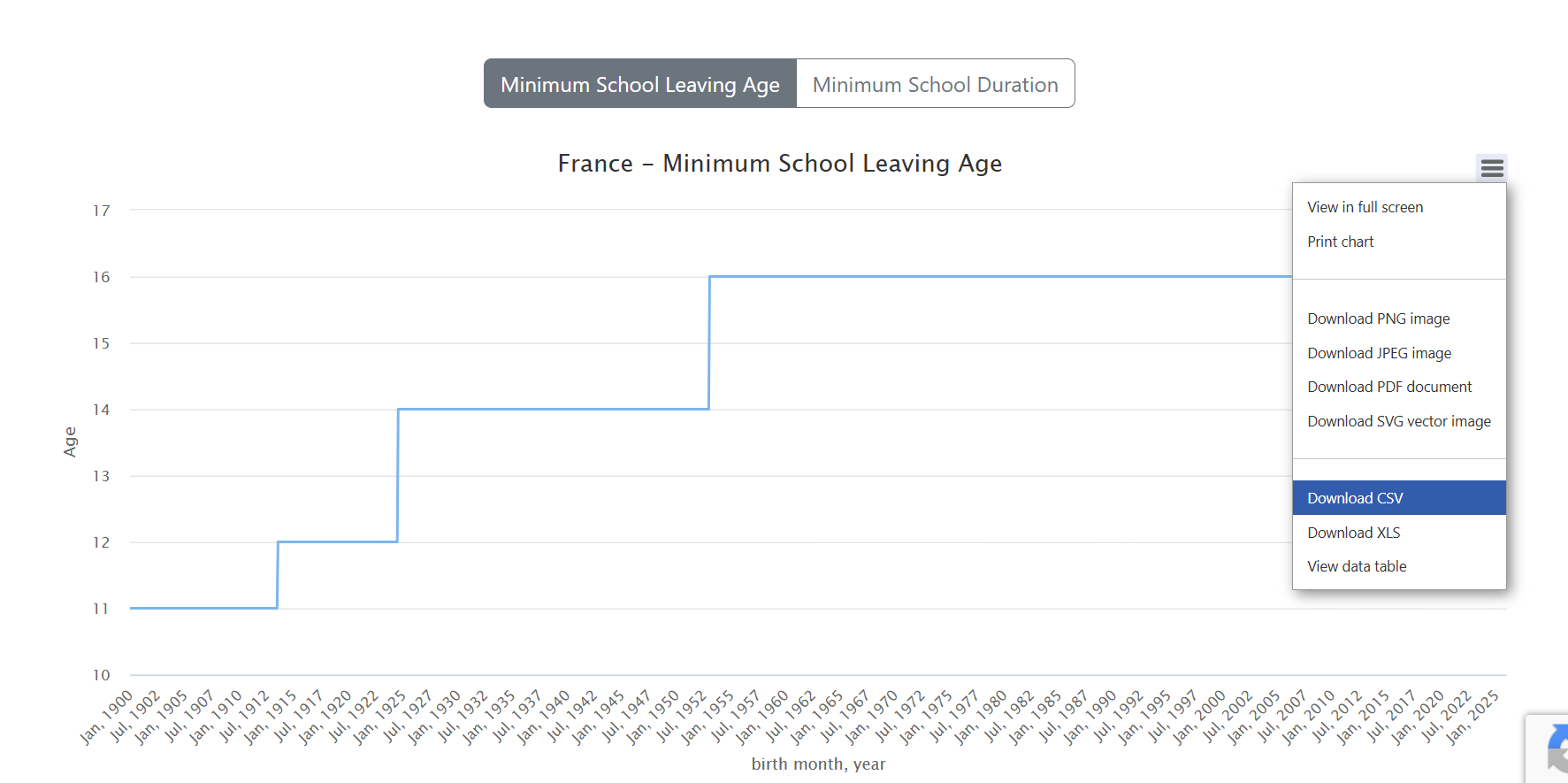
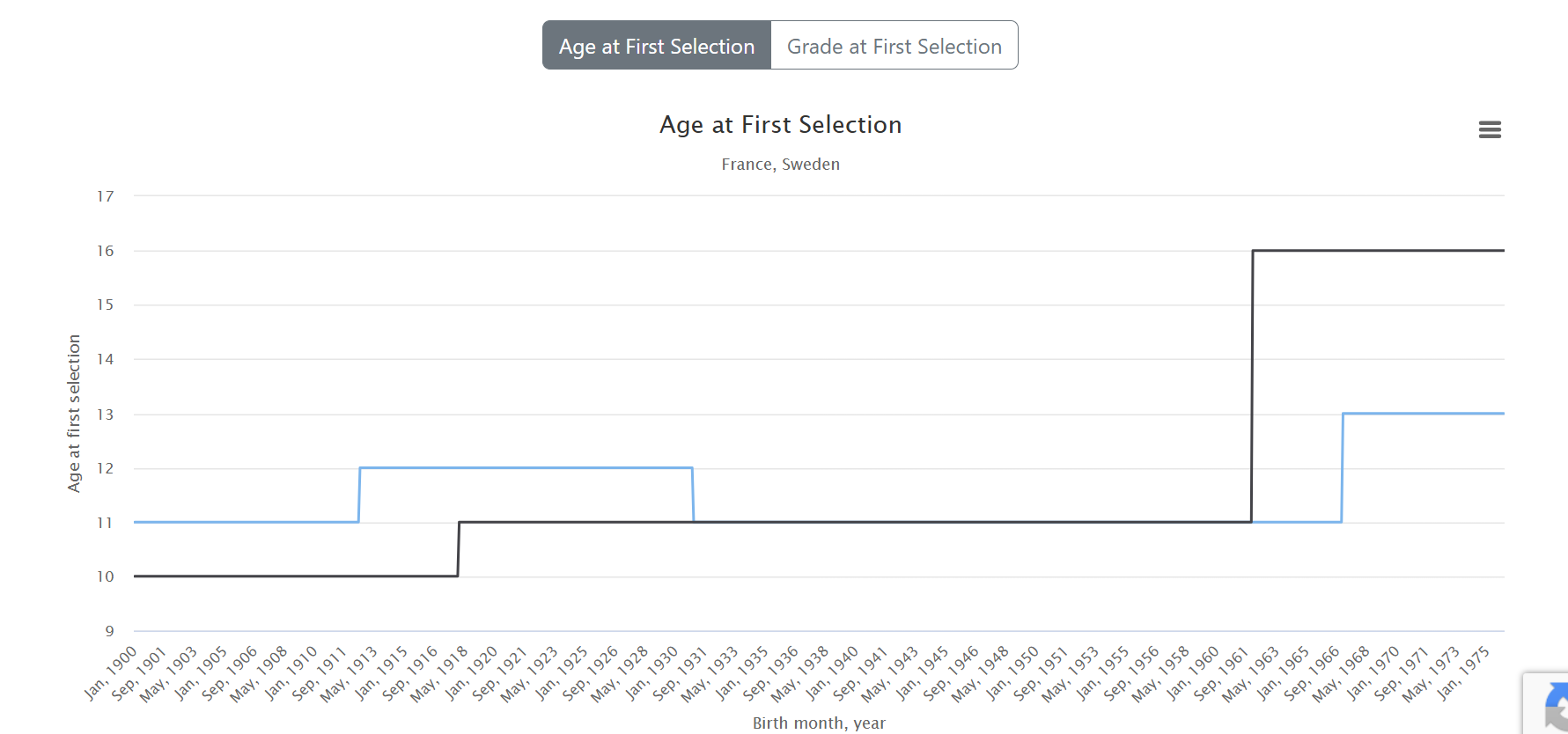
In addition, there is a policy comparison tool that enables researchers to compare specific policy features over countries and across time (minimum school leaving age and minimum school duration for compulsory schooling, and age at first selection and grade at first selection for educational tracking).
Next Steps
Following the publication of version 1.2 of the international compulsory schooling document and version 1.1 of the tracking document, the Gateway education team has several projects in development. In the coming months, the team will publish a document on Indian compulsory schooling, providing in-depth details on these policies in 29 states and territories. Researchers are also developing an early childhood education and care series.
About the author:
- McKayla Wenner is a Project Specialist at the University of Southern California.